
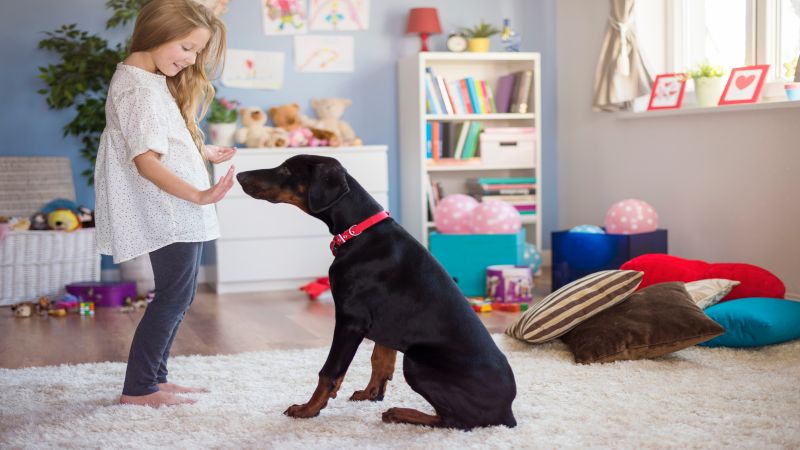
Your days suddenly revolve around wagging tails, clumsy paws, and an overwhelming amount of cute photos. But amidst the cuddles and playtime, you might notice your favorite shoes have become chew toys. Puddles mysteriously appear on the living room rug. That adorable little furball has a mind of their own, and they are testing boundaries you didn’t even know existed.
This chaotic phase naturally leads every new pet parent to ask the exact same question: exactly when to start puppy training? You might hear conflicting advice at the dog park. Some owners swear by waiting until the dog is a bit older, while others insist on starting the moment those paws cross your threshold.
Sorting through the noise can be frustrating. You want the best for your newest family member, and establishing good habits early is the foundation of a happy, stress-free life together.
In this post, we will clear up the confusion surrounding the ideal training timeline. You will learn why the early days are crucial for your dog’s cognitive development, how to approach those vital first weeks, and how Wild Child Dog Training can help you transform your mischievous pup into a confident, well-mannered companion.
The Myth of Waiting for Six Months
Years ago, standard advice dictated that formal training should wait until a dog was at least six months old. The logic assumed that young puppies simply lacked the attention span to learn. We now know this outdated approach completely misses a dog’s most critical developmental stage.
Modern behavioral science paints a very different picture. Puppies are essentially little sponges. Their brains are incredibly receptive to new experiences, environments, and routines. Waiting half a year to teach basic manners often means you will spend more time correcting bad habits than building good ones.
If you let a puppy practice jumping on guests or barking at the mail carrier for six months, those behaviors become deeply ingrained. Unlearning a bad habit is much harder than teaching the right behavior from the very beginning.
Day One: The Unofficial Classroom
The true answer to when to start puppy training is the very first day you bring your new dog home. This does not mean you need to drill them on complex obedience commands within hours of meeting them. Instead, early training is all about structure, trust, and gentle guidance.
Setting the Ground Rules
Your puppy is constantly observing you to figure out how the world works. Every interaction is a learning opportunity. When you take them outside to the designated bathroom spot and reward them for going, you are training. When you redirect their sharp little teeth from your fingers to a suitable chew toy, you are training.
Consistency is your best friend during this phase. If the couch is off-limits, it must be off-limits every single day, not just when you are wearing nice clothes. Setting clear boundaries helps your puppy feel secure because they know exactly what to expect from you.
Harnessing Positive Reinforcement
Puppies thrive on praise and rewards. Catch them doing something right and celebrate it. If your pup sits politely instead of jumping up for their food bowl, reward that calm behavior immediately.
At Wild Child Dog Training, we champion positive reinforcement because it builds an unbreakable bond of trust between you and your dog. It teaches your puppy that making good choices leads to wonderful things, turning learning into a fun game rather than a stressful chore.
The Sweet Spot: Formal Socialization
While home rules start on day one, formal socialization and structured classes have a specific golden window. The prime socialization period for puppies occurs between 8 and 16 weeks of age.
During this brief window, puppies are highly adaptable. They are biologically primed to accept new people, other animals, strange noises, and novel environments without fear. Exposing them to the world in a safe, controlled, and positive manner during these weeks is the single most important thing you can do for their behavioral health.
This is exactly where Wild Child Dog Training steps in to support you. Our early puppy programs are specifically designed to safely capitalize on this 8 to 16-week window. We provide a structured environment where your puppy can learn crucial social skills, basic commands, and bite inhibition among their peers.
Why Early Intervention Matters
Missing this critical socialization window can lead to behavioral challenges down the road. Dogs that are kept isolated during their first few months often develop fear-based reactivity. A vacuum cleaner, a person wearing a large hat, or a friendly dog on a walk can trigger a panic response simply because the dog was never taught that these things are safe.
Early training builds resilience. It teaches your puppy how to recover quickly from startling experiences. A confident dog is a relaxed dog, and a relaxed dog makes for a peaceful household.
By starting early, you are not just teaching your dog how to sit or stay. You are giving them the emotional toolkit they need to navigate a complex human world. You are helping them become a dog that can happily join you at a bustling outdoor cafe, greet visitors politely, and walk calmly by your side.
Ready to Raise a Wildly Good Dog?
When to start puppy training is not a guessing game, because the moment your puppy comes home is the moment their education begins. Starting early with gentle boundaries and consistent routines helps shape positive behavior from the very beginning. By taking full advantage of the critical socialization window, you set the foundation for a confident, well-mannered dog and a lifetime of good habits.
You do not have to navigate this rewarding journey alone. The expert team at Wild Child Dog Training is here to guide you every step of the way. We focus on building confidence, teaching essential life skills, and strengthening the incredible bond you share with your dog.
Don’t let the golden window close. Reach out to Wild Child Dog Training today to enroll in our puppy programs, and let’s work together to bring out the absolute best in your new best friend. See more
Contact Info
Name: Wild Child Dog Training
Address: 491 Smith Rd, Maysville, NC 28555
Phone: (910) 378-9377
Email: training@wcdogtraining.com