
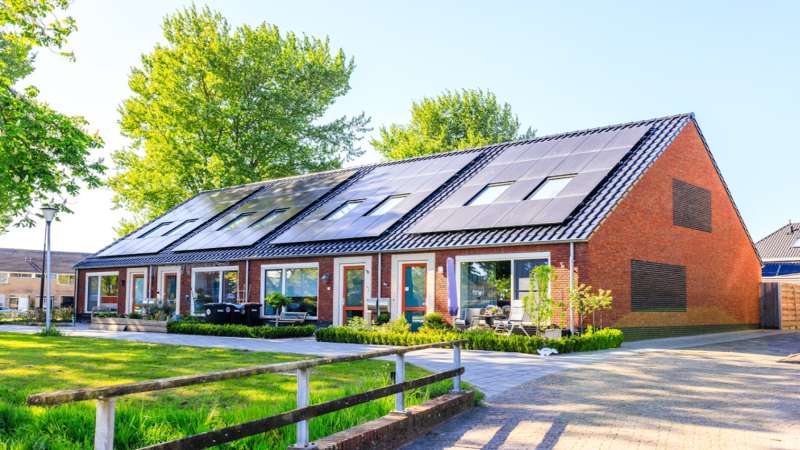
Understanding Washington’s IRA Home Energy Rebate Programs
The Inflation Reduction Act (IRA), signed into law in August 2022, represents a monumental federal investment in clean energy and climate action. For Washington homeowners, this translates into unprecedented opportunities to improve their homes’ energy efficiency and embrace electrification. The Washington State Department of Commerce is at the forefront of implementing these federal programs, managing over $165 million in funding specifically for two key rebate initiatives: the Home Energy Rebates Program (HOMES) and the High-Efficiency Electric Home Rebate Program (HEEHRA), often referred to as HARP.
These programs are designed to make energy-efficient upgrades more accessible and affordable. The HOMES program focuses on comprehensive, whole-home energy retrofits, rewarding homeowners for achieving significant, measurable energy savings. This could involve deep weatherization projects, insulation upgrades, or a combination of improvements that collectively reduce a home’s overall energy consumption. In contrast, the HARP program provides point-of-sale discounts for specific high-efficiency electric appliances and home electrification measures, such as heat pumps, heat pump water heaters, and electrical panel upgrades. While HOMES targets overall energy reduction, HARP incentivizes the switch to modern, electric-powered systems.
The administration of these programs in Washington is being handled by Guidehouse, a third-party administrator selected by the Department of Commerce. This approach ensures a streamlined process for homeowners and contractors, aiming to facilitate the widespread adoption of these beneficial technologies across the state, including in regions like Southwest Washington and communities such as Vancouver, WA.
How Income Eligibility and Property Types Determine Your Rebate
Eligibility for Washington’s IRA home energy rebates is primarily determined by household income relative to the Area Median Income (AMI), as well as property type. Generally, households earning up to 150% of their local AMI are eligible for rebates. The amount of the rebate often scales with income, meaning those with lower incomes typically qualify for higher incentive amounts. For instance, households earning below 80% AMI may qualify for the maximum rebate amounts, potentially covering a larger percentage of project costs. To illustrate, a family of four in King County might have an 80% AMI threshold around $116,000, while in Spokane County, it could be closer to $74,000. These thresholds are dynamic and vary significantly by county and household size, so it’s crucial for homeowners to check the specific income limits applicable to their location through the Washington Department of Commerce’s official resources.
The programs extend beyond single-family homeowners. Renters, multifamily building owners, and even new construction projects can benefit from these incentives. For renters, incentives might involve portable or window-unit heat pumps, or require cooperation with landlords for permanent installations. Multifamily building owners can access significant rebates for common area improvements and individual unit upgrades, often with provisions for tenant protection. These broad eligibility criteria ensure that the benefits of the IRA are distributed widely, fostering energy efficiency across various housing types in communities like Clark County and beyond.
The Strict Pre-Approval Process for State Rebates
A critical aspect of claiming Washington’s IRA home energy rebates is understanding the strict pre-approval process. Unlike some other incentive programs, these rebates are not retroactive. This means that any purchases or work completed before receiving official pre-approval will not qualify for a rebate. This requirement is in place to ensure proper allocation of funds and adherence to program guidelines.
Homeowners must apply and receive approval through Guidehouse, the state’s chosen rebate administrator, before initiating any purchases or home upgrades. This process typically involves submitting documentation related to household income, property type, and the proposed energy efficiency improvements. Once pre-approved, homeowners can then proceed with their projects, confident that their investment will be partially offset by the rebate.
Effective contractor coordination is paramount in this process. Homeowners should work with contractors who are familiar with the IRA programs and the state-specific application requirements. These professionals can assist in conducting necessary energy audits, identifying qualifying equipment, and ensuring that all documentation standards are met. The application order matters significantly; often, utility rebates are applied first, and then state or federal incentives are claimed on the net project cost. This meticulous approach, though requiring upfront planning, safeguards homeowners against common pitfalls and ensures a successful rebate claim.
Qualifying Equipment and Home Upgrades under HOMES and HARP
The Inflation Reduction Act’s rebate programs in Washington cover a wide array of home improvements and equipment designed to boost energy efficiency and promote electrification. These measures not only reduce a home’s carbon footprint but also lead to significant long-term savings on utility bills and enhanced indoor comfort.
- Heat Pumps:This includes both air-source heat pumps for space heating and cooling, and heat pump water heaters.
- Electrical System Upgrades:Rebates are available for necessary electrical panel upgrades (up to $4,000) and electrical wiring upgrades (up to $2,500) that support the installation of new high-efficiency electric systems.
- Insulation and Weatherization:Measures such as adding insulation to attics, walls, and floors, as well as air sealing and ventilation improvements, are often covered under the HOMES program for whole-house energy savings.
- Energy-Efficient Appliances:The HARP program specifically targets certain ENERGY STAR certified electric appliances, encouraging the switch from fossil fuel-powered alternatives.
To qualify, equipment must meet specific efficiency standards, often indicated by ENERGY STAR certification or other performance metrics. For instance, heat pumps typically need to meet minimum SEER2 and HSPF2 ratings to be eligible, ensuring they deliver substantial energy savings.
High-Efficiency Heat Pump Water Heaters
Heat pump water heaters (HPWHs) are a cornerstone of home electrification efforts, offering a highly efficient alternative to traditional tanked water heaters. Instead of generating heat directly, HPWHs work by extracting heat from the surrounding air and transferring it to the water in the tank, making them two to three times more energy efficient than conventional models.
For Washington homeowners, the benefits of installing a heat pump water heater are substantial. Beyond the energy savings, these units often qualify for significant rebates under the HARP program. For households earning up to 80% AMI, a heat pump water heater could qualify for up to $1,750 in rebates, while those between 80-150% AMI might receive up to $875. These amounts can cover a substantial portion of the installation cost, making the upgrade much more affordable.
When considering a heat pump water heater, there are a few installation specifics to keep in mind. These units require sufficient air volume around them to operate efficiently, typically needing a space of at least 1,000 cubic feet. They also produce condensate, similar to an air conditioner, which requires a drain connection. For detailed insights into the specific incentives and practical considerations for these systems, we encourage you to explore the comprehensive information available on Washington heat pump water heater benefits. Understanding these nuances ensures a smooth installation and maximizes the long-term energy savings for your home in areas like Ridgefield, WA.
Space Heating and Cooling with Advanced Heat Pumps
Modern heat pumps are revolutionizing home comfort and energy efficiency, providing both heating and cooling from a single, electric-powered system. For Washington homeowners, especially those in diverse climates across the state, advanced heat pumps offer a compelling solution to replace aging furnaces and air conditioners.
The IRA programs heavily incentivize the adoption of these systems. Both ducted heat pumps, which integrate with existing ductwork, and ductless mini-splits, ideal for homes without ducts or for zone heating/cooling, are eligible for rebates. A key consideration for homeowners in Washington is cold-climate performance. Modern cold-climate heat pumps are specifically engineered to operate effectively even in sub-freezing temperatures, making them suitable for winters west of the Cascades and increasingly viable for colder regions to the east.
To qualify for rebates, these systems must meet stringent efficiency metrics. Homeowners should look for systems with high SEER2 and HSPF2 ratings, and those listed on the NEEA (Northwest Energy Efficiency Alliance) Qualified Products List, to ensure eligibility and optimal performance. For example, in communities like Battle Ground, WA, installing a high-efficiency cold-climate heat pump can significantly reduce energy bills while providing consistent comfort year-round.
Maximizing Savings by Stacking Federal Tax Credits and Utility Rebates
Navigating the landscape of energy efficiency incentives can seem complex, but the real power lies in “stacking” various programs. Washington homeowners have a unique opportunity to combine federal tax credits, state rebates, and local utility incentives to dramatically reduce the out-of-pocket cost of their energy upgrades.
At the federal level, two primary tax credits under the IRA are particularly relevant:
- The 25C Energy Efficient Home Improvement Credit:This credit allows homeowners to claim 30% of project costs for qualified energy property, up to a maximum of $2,000 per year for heat pumps and heat pump water heaters, and a $1,200 annual cap for other efficiency improvements like insulation, windows, and doors. This credit is calculated on the net cost after any rebates have been applied.
- The 25D Residential Clean Energy Credit:This provides a generous 30% uncapped tax credit for residential clean energy systems, including solar, solar water heaters, and critically for some Washington homeowners, geothermal heat pump installations. This credit covers not only equipment but also labor and piping costs, offering substantial savings for these larger investments.
Both 25C and 25D are nonrefundable tax credits, meaning they can reduce your tax liability to $0, but you won’t receive a refund for any excess credit. To claim these, homeowners file IRS Form 5695 with their federal tax return. Spacing out installations across tax years can be a strategy to maximize the annual limits of the 25C credit.
Integrating Local Utility Incentives in Southwest Washington
Beyond state and federal programs, local utility companies across Washington offer their own valuable incentives that can be stacked with IRA benefits. These utility rebates often provide immediate savings and can significantly enhance the overall financial appeal of energy-efficient upgrades.
In Southwest Washington and other parts of the state, homeowners should investigate programs offered by their specific utility provider. Major players include:
- Puget Sound Energy (PSE):PSE offers a variety of rebates, including substantial incentives for heat pump installations and weatherization. Their “Efficiency Boost” program, for example, can provide thousands of dollars for income-qualified households switching from natural gas to electric heat pumps.
- Tacoma Power:This utility also provides incentives for heat pumps and other efficiency upgrades.
- Clark Public Utilities:Serving Clark County, this utility offers rebates for heat pumps, insulation, and other energy-efficient improvements.
The key to maximizing savings is understanding the “stacking” rules. Often, utility rebates are applied first, reducing the total project cost. Then, federal tax credits (like 25C) are calculated on this reduced net cost. Homeowners should always verify their utility’s specific rebate programs and ensure their chosen contractor is part of the utility’s authorized “trade ally” network, as this is often a requirement for higher-tier rebates. For instance, a homeowner in Camas, WA, could combine a Clark Public Utilities rebate with state HARP funds and the federal 25C tax credit for a new heat pump system, leading to substantial overall savings.
Navigating State Building Codes and Gas Reform Policies
Washington State has been a national leader in advancing building electrification and energy efficiency, and its policies interact significantly with federal IRA incentives. Homeowners undertaking upgrades need to be aware of these state-level policies, which can influence project scope and eligibility.
The Washington State Clean Buildings Act, while primarily targeting commercial buildings, sets a precedent for energy performance that influences the broader energy efficiency landscape. More directly impactful for residential properties is the evolving state building code. The 2021 State Building Code cycle, for example, effectively mandates heat pumps as the primary heating system in most new residential construction, signaling a clear direction towards electrification.
Another significant development is HB 1589, which modifies Puget Sound Energy’s “obligation-to-serve” requirements for natural gas. While this bill does not ban natural gas appliances in existing homes, it shifts the economic calculus, potentially reducing subsidies for new gas hookups and encouraging a transition away from gas infrastructure. For homeowners considering a dual-fuel system (a heat pump paired with a gas furnace backup), it’s crucial to understand that federal and state rebate programs, particularly HARP, are generally structured to support full electrification. Dual-fuel configurations that retain a gas furnace as the primary backup typically do not qualify for the heat pump rebate. Instead, cold-climate variable-capacity heat pumps with electric strip backup are the preferred and qualifying solution for full electrification.
Understanding these state policies ensures that homeowners in places like Washougal, WA, not only comply with current and future regulations but also maximize their eligibility for available incentives by choosing fully electric, high-efficiency solutions.
Requirements for Successful Rebate Claims and Professional Installation
Successfully claiming IRA rebates and tax credits in Washington requires meticulous attention to detail and adherence to specific program requirements. This is where the expertise of professional HVAC services becomes invaluable.
To ensure a smooth process, homeowners should be prepared to provide:
- Licensed Contractors:All work must be performed by licensed, qualified contractors. Many state and utility programs require contractors to be enrolled in specific “trade ally” networks.
- Manual J Load Calculations:For new HVAC systems, a Manual J load calculation is often required. This professional assessment determines the precise heating and cooling needs of your home, ensuring the installed system is correctly sized for optimal efficiency and comfort, rather than being undersized or oversized.
- AHRI Reference Numbers:The Air-Conditioning, Heating, & Refrigeration Institute (AHRI) provides a certification directory for HVAC equipment. Homeowners will need AHRI reference numbers for their installed heat pump or heat pump water heater to verify its efficiency ratings and eligibility for many rebate programs.
- Itemized Invoices:Detailed invoices that clearly separate labor and material costs, and list specific equipment model numbers, are essential for documentation.
- Municipal Permits:Obtaining all necessary local municipal permits before work begins is crucial. This ensures the installation meets local building codes and passes required inspections.
- Post-Installation Inspections:Many programs require post-installation inspections or verification to confirm that the work was completed correctly and meets program standards.
These requirements, while seemingly extensive, are designed to protect homeowners, ensure the quality of installations, and verify that public funds are used effectively to achieve energy savings.
Why Professional HVAC Services Matter in Southwest Washington
The complexity of modern HVAC systems and the detailed requirements of federal, state, and local incentive programs underscore the importance of choosing professional HVAC services, especially in a region like Southwest Washington.
Local expertise is paramount. A professional contractor familiar with the specific climate conditions of Longview, WA, Battle Ground, WA, or Ridgefield, WA, can accurately perform system sizing and climate-specific calibration. This ensures your heat pump or heat pump water heater operates at peak efficiency for your unique home and local weather patterns. They understand the nuances of cold-climate heat pump performance and can recommend systems best suited for the area.
Furthermore, professional installers are well-versed in local building codes and permitting processes, ensuring your installation is compliant and safe. They can guide you through the intricate application processes for various rebates and tax credits, helping you gather the necessary documentation like AHRI certificates and itemized invoices. Their knowledge of manufacturer warranties is also critical, as proper installation by certified technicians is often a prerequisite for warranty validity. Engaging a reputable HVAC professional is not just about installation; it’s about securing your investment, maximizing your savings, and ensuring long-term home comfort and efficiency.
Frequently Asked Questions about Heat Pump Water Heaters and HVAC Rebates
We often encounter common questions from Washington homeowners about these new and evolving rebate programs. Here are some of the most frequent inquiries and their answers:
Are Washington’s IRA home energy rebates retroactive for past installations?
No, Washington’s IRA home energy rebates, specifically the HOMES and HARP programs managed by the Department of Commerce through Guidehouse, are explicitly not retroactive. This is a crucial point for homeowners to understand. Any purchases of qualifying equipment or commencement of work on energy efficiency upgrades that occurred before receiving official pre-approval from the program administrator will not be eligible for a rebate. The application timeline dictates that homeowners must apply for the rebate and receive confirmation of eligibility before making any purchases or starting their installation projects. This pre-approval mechanism is designed to ensure that funds are allocated correctly and that all program requirements are met from the outset.
Can renters and landlords both benefit from heat pump water heaters and HVAC incentives?
Yes, the Inflation Reduction Act programs are designed to be inclusive, offering benefits to both renters and landlords in Washington State. For renters, direct incentives might be available for portable or window-unit heat pumps, which do not require permanent installation. However, for more substantial upgrades like whole-home heat pump systems or heat pump water heaters, landlord cooperation is essential. The application flow for such permanent installations typically runs through the property owner.
Multifamily property owners can access significant rebates for upgrading common areas and individual units, often with specific provisions for tenant protections. These protections might include rent-stabilization commitments for income-qualified properties, ensuring that the benefits of energy efficiency are passed on to residents. We encourage renters and landlords to communicate and explore these opportunities together, as the shared benefits of reduced utility bills and improved home comfort can be substantial.
How do I verify if my new heat pump or heat pump water heater qualifies for the 25C tax credit?
To verify that your new heat pump or heat pump water heater qualifies for the federal 25C Energy Efficient Home Improvement Credit, you’ll need to ensure it meets specific criteria:
- ENERGY STAR Certification:The equipment must be ENERGY STAR certified. This certification indicates that the product meets strict energy efficiency guidelines set by the U.S.
- Manufacturer Certification Statement:You should obtain a manufacturer certification statement for your specific model. This document officially certifies that the product meets the energy efficiency requirements for the tax credit. Your installer or the manufacturer’s website can typically provide this.
- AHRI Certificate:For heat pumps, an AHRI (Air-Conditioning, Heating, & Refrigeration Institute) certificate is often used to verify performance ratings (like SEER2 and HSPF2) and ensure the system is a matched combination that meets the minimum efficiency standards.
- Tax Filing:When filing your federal taxes, you will use IRS Form 5695, Residential Energy Credits, to claim the 25C credit. You will need to provide information about the qualified property and its cost. It’s crucial to retain all purchase receipts, invoices, and manufacturer documentation for your records in case of an audit.
Working with a knowledgeable contractor who is familiar with these requirements can significantly simplify this verification process and ensure your installation is eligible for the maximum available credit.
Conclusion
The Inflation Reduction Act has ushered in an era of unprecedented opportunities for Washington homeowners to enhance their homes’ energy efficiency and embrace electrification. From the comprehensive HOMES program to the point-of-sale HARP rebates, coupled with powerful federal tax credits and local utility incentives, the financial landscape for energy upgrades has never been more favorable. By understanding the nuances of income eligibility, the critical pre-approval process, and the specific requirements for qualifying equipment like heat pumps and heat pump water heaters, homeowners in Southwest Washington and across the state can unlock substantial savings.
We believe that investing in high-efficiency HVAC systems and electrification measures is not just about reducing utility bills; it’s about improving home comfort, contributing to a sustainable future, and enhancing property value. Navigating these programs requires attention to detail and often the guidance of experienced professionals. We are committed to helping our community achieve these benefits, ensuring that every homeowner can enjoy a more energy-efficient, comfortable, and sustainable home. With local expertise and a deep understanding of these evolving incentives, we are here to guide you through every step of your energy upgrade journey. See more