
The explosive growth of online shopping over the past decade has completely transformed retail economics, but it has also created a significant environmental challenge. Millions of parcels are processed daily across global supply chains, generating a massive amount of packaging waste that consumers must manage at their doorsteps. For sustainability coordinators, logistics managers, and growing brands, the focus has shifted from standard transit security to true environmental responsibility. Modern consumers are increasingly critical of receiving small items wrapped in oversized boxes filled with non-recyclable plastic air pillows, polystyrene packing peanuts, or sheets of traditional plastic bubble wrap.
Integrating high-performance, circular materials into your shipping workflow allows your business to protect fragile products while meeting strict modern environmental goals. Sourcing reliable ecommerce packaging in Australia enables retail brands to systematically remove single-use plastics from their fulfillment centers without compromising on structural safety or parcel throughput. Shifting toward a plastic-free fulfillment model requires a clear look at how traditional void-fill materials cause long-term environmental damage, and how modern paper-based engineering provides an elegant, fully recyclable solution.
The True Cost of Plastic Void-Fill
For a long time, the e-commerce sector relied heavily on low-cost petroleum-based plastics to protect products during transit. Materials like low-density polyethylene (LDPE) air pillows and expanded polystyrene (EPS) peanuts became industry standards because they are lightweight and reasonably effective at absorbing shock. However, these materials come with serious environmental drawbacks at the end of their brief functional life.
Conventional flexible plastics and foam chips cannot be placed into standard household curbside recycling bins. Instead, they require specialized, secondary drop-off processing, which the vast majority of consumers rarely use. As a direct result, billions of these plastic pillows end up in local landfills or escape into natural waterways. Over decades, environmental exposure breaks these large sheets down into microplastics, which persist in the soil and ocean ecosystems for centuries. Furthermore, manufacturing these fossil-fuel-based polymers generates high carbon emissions, which actively works against any modern corporate sustainability goals.
Systematically Auditing Your Fulfillment Center
Transitioning to a fully circular shipping setup begins with a comprehensive packaging audit inside your distribution hubs. This practice forces packing teams to use excessive amounts of plastic void-fill to prevent items from shifting around inside the box.
A structured packaging audit evaluates three primary areas:
- Dimensional Accuracy: Matching box sizes closely to the actual dimensions of your products minimizes empty interior spaces. This adjustment immediately reduces the physical volume of extra cushioning needed for each parcel.
- Material Uniformity: Aiming to use a single type of material throughout the entire parcel makes disposal much easier for the end consumer. Combining a corrugated box with paper tape and paper wrap allows the recipient to drop the entire flat-packed box directly into a single recycling bin.
- Acoustic and Speed Metrics: Testing how quickly packing teams can apply sustainable alternatives ensures that updating your materials will not slow down fulfillment speeds during peak seasonal shipping periods.
The Mechanics of Hex Honeycomb Protective Cushions
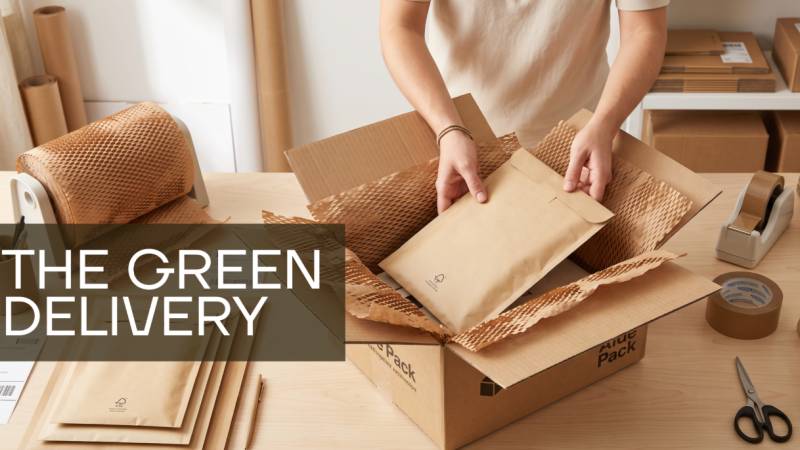
The most innovative replacement for traditional plastic bubble wrap is engineered hex honeycomb paper wrap. This material is delivered to fulfillment centers as compact, flat rolls of heavy-duty, die-cut kraft paper. When pulled through a manual or automated tension dispenser, the paper stretches and expands into a distinctive three-dimensional interlocking hexagonal matrix.
This structural expansion completely changes how the paper behaves. The expanded hexagonal cells create an angled, multi-layered cushion that absorbs heavy impacts, disperses vertical pressures, and provides excellent scratch resistance for delicate surfaces. This makes it an ideal choice for protecting fragile items like artisan ceramics, glassware, cosmetics, and sensitive electronics during long-distance transit.
A major operational benefit of hex honeycomb wrap is its unique interlocking geometry. As the expanded paper cells wrap around an object, they naturally hook into one another. This secure friction lock holds the wrapping firmly in place without requiring plastic adhesive tape. Packing staff can simply wrap the item, tear the paper cleanly by hand, and place the protected product directly into the shipping box. This simple adjustment saves valuable seconds per order, reduces tape consumption across your warehouse, and streamlines the unboxing experience for your customers.
Transitioning to Recyclable Paper Mailers
For non-fragile items like clothing, soft home goods, documents, and boxed cosmetics, rigid corrugated boxes are often unnecessarily heavy and bulky. Shipping small goods in oversized boxes increases the dimensional weight of the package, which raises fuel consumption and carbon emissions across delivery fleets.
High-performance paper mailers offer a lightweight, highly efficient alternative to traditional poly mailer bags. Modern paper mailers are constructed from heavy-duty, water-resistant kraft paper and feature gusseted edges that expand to accommodate bulky items comfortably. To ensure clean closure, these mailers are manufactured with pre-applied, natural starch-based self-adhesive strips that seal firmly without plastic liners.
From an environmental standpoint, these fiber-based mailers provide exceptional circular performance. Unlike plastic poly bags that degrade into harmful microplastics, responsibly sourced paper mailers degrade safely. If a paper mailer ends up in a backyard compost bin or a commercial facility, it breaks down into organic matter within ninety days without leaving any toxic synthetic residues in the soil. Furthermore, they are fully compatible with standard residential curbside recycling bins, making it easy for consumers to dispose of them responsibly.
Aligning with Global Environmental Frameworks
Updating your e-commerce fulfillment chain is not just an aesthetic upgrade or a marketing tactic. It is a necessary step to align your operations with strict corporate environmental goals and evolving national packaging targets. Regulatory authorities worldwide are introducing stricter reporting rules that require businesses to take full responsibility for the entire lifecycle of their retail packaging.
Adopting a completely plastic-free, paper-based packaging setup helps your brand stay comfortably ahead of these coming regulations. Using raw materials certified by the Forest Stewardship Council (FSC) ensures that your packaging is sourced from responsibly managed forests that support biodiversity and protect local ecosystems. This systematic approach shields your business from the rising operational costs of plastic disposal taxes, while strengthening your brand reputation with a growing demographic of eco-conscious consumers.
Conclusion: Securing a Sustainable Retail Future
Shifting your online storefront toward a fully recyclable fulfillment model is a highly effective way to reduce your carbon footprint while optimizing your warehouse operations. Moving away from conventional plastic bubble wrap and air pillows in favor of hex honeycomb paper wrap and high-density paper mailers allows your business to protect products reliably without generating permanent plastic waste.
The true strength of a circular delivery system lies in its overall simplicity. Replacing complex, multi-material packaging with single-stream, paper-based alternatives makes it incredibly easy for your customers to recycle their packaging correctly at home. Take proactive control of your distribution lines today, invest in advanced paper-based packaging materials, and turn your daily e-commerce deliveries into a clear statement of your brand’s commitment to sustainability. See more