
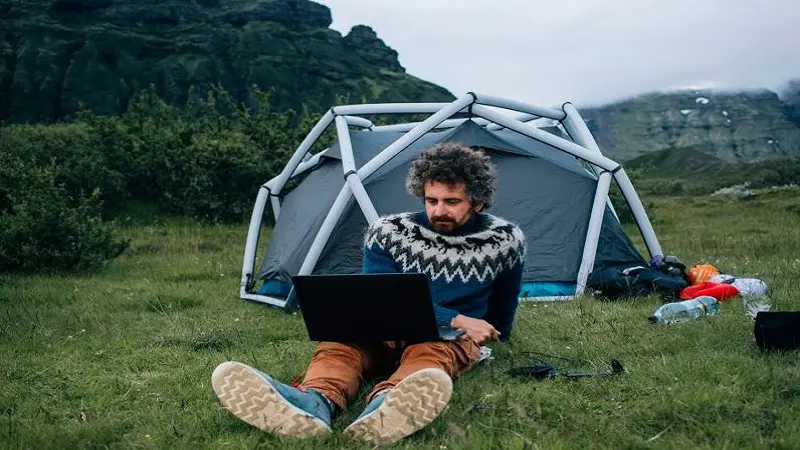
Camping power does more than charge your phone now. Today, in many places where you do not have the usual power, you can run fridges, lights, phones, and some home items without using fuel generators. With lithium, portable power is lighter, makes less noise, and goes well with the way people camp.
If you want to upgrade your camping gear, it’s smart to shop portable lithium battery pack for camping by looking at your whole setup. You should not just check how much power the battery gives. Think about your need for energy, what safety features there are, how you will charge it, and how it connects with other things. This way you can pick a good battery for now and your next trips.
Step 1: Determine the Total Amount of Power
Firstly, one has to understand which type of electrical devices the battery will be able to power. Capacity is usually expressed in amp hours (Ah) or watt hours (Wh). The second unit will help to compare different types of energy sources and understand their capacity.
A minimum-sized system will power such things as a fridge, LEDs, a phone, and some small gadgets that may be needed during weekends. For long journeys or for heavy-duty equipment, 200 Ah is required in case of an inverter for 240V devices.
Do not select the largest battery available. First of all, calculate the total amount of power used per day. Add some extra percentage in case you plan to use more power than usual.
Step 2: Capacity Is Not Everything
High values for capacity are good, but they are not the only characteristic of the battery. A decent lithium battery should have a Battery Management System (BMS).
The BMS checks the power cell. It helps stop trouble like too much charging, draining all the way, short circuits, and too much heat or cold. This is very good when you use the gear outside. Out there, the temperature and how things run can change fast.
LiFePO4 chemistry is now popular for camping. It lasts a long time. It is also lighter than old lead batteries.
Pro tip: Look at the usable power of the battery and how it stays safe. Do not look only at the Ah number.
Step 3: Decide How You Will Recharge
The next thing to think about is how the battery gets its power again.
Panels that make power from the sun work well when you go far from places with power. You can use folding panels or camping blankets during the day when there is good light. A DC charger in your car can help when you go on a trip. You can also charge with AC at home before you leave, so your power pack is good to go.
A setup that is easy to change lets you use more than one way to charge. You do not have to depend on only one way.
Step 4: Check Every Connection
Compatibility can be what helps a portable power setup work well, or not work at all.
Before you buy, check if the outputs fit what your equipment needs. What you need can be different, and it depends on your own system. It might include:
- USB and USB-C ports let you use and charge your electronics
- 12V sockets work for your camping gear
- Anderson-style plugs included
- Standard AC outlets let you use the things that need them
Also, think about how long the cables and adapters will be, and where you will keep the power station most of the time. A good power source is not much help if you have to use many hard-to-use adapters to hook up your things.
Step 5: Think About the Future of Off-Grid Power
Portable power is now part of a bigger move to make things work together outside. People do not just see a power pack as something you use on its own. Campers can build a good energy system. They can use the sun to charge it, plug it into the car, use things that do not need a lot of energy, and add more spots to keep power.
This way of planning and bringing ideas together is seen in today’s engineering work too. In these projects, people talk to the experts for each part of the job. They also use a clear design. Tools like 3D modeling help the system work right from the start. The main idea is to make the system as one whole thing. Don’t just pick parts on their own.
Portability matters, too. A small unit with a carry handle is good when you go tent camping. A bigger system that you can add to may be better for caravans or long trips.
Choosing a Smarter Camping Power Setup
The best lithium option is not always the biggest or the most expensive one. Start by finding out how much energy you use. Then, check the BMS safety, how much of the battery you can use, charging options, how it connects, and what can be added later.
If you want to shop portable lithium battery pack for camping, a good setup can give you the power you need for a fridge, lights, and other things you use. You will not need to use fuel as much. With new portable energy choices coming up, it is easier to pick a setup that can change as your needs change. It also makes it simple to add upgrades over time. See more