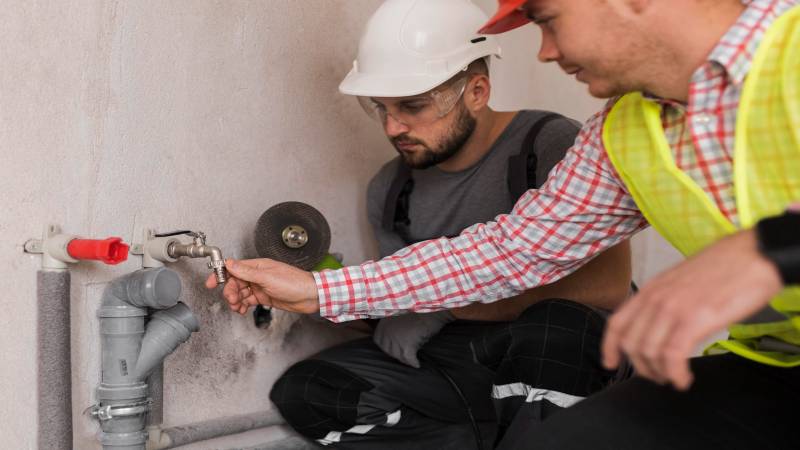
Hidden water leaks are caused by aging pipe joints, corroded fittings, shifting foundations, faulty appliance connections, and poor installation work behind walls or under slabs. Both older and newer homes are at risk, just for different reasons. Catching a leak early usually comes down to professional water leak detection and repair, since most hidden leaks give off signs long before they cause visible damage.
This guide walks through what actually causes these leaks in homes of every age, the warning signs you can check yourself, and when it’s time to call in someone with the right equipment.
A hidden water leak happens when water escapes from a pipe, fitting, or appliance connection somewhere you can’t see it, usually inside a wall, under a floor, or beneath a slab. Older homes leak because of corroded galvanized pipe and worn joints. Newer homes leak because of poor installation, cheap fittings, or pipes disturbed during other renovation work. Signs include rising water bills, musty smells, warm spots on the floor, and unexplained mold.
What Causes Hidden Water Leaks in Older Homes?
Older homes carry decades of wear that you simply can’t see from the outside.
1. Corroded and Aging Pipes (Galvanized and Copper)
Galvanized steel pipe was standard in homes built before the 1960s. Over time, the zinc coating breaks down and rust builds up inside the pipe walls. Eventually a pinhole opens up, and water starts seeping out slowly, often for months before anyone notices.
Copper pipe holds up longer, but it isn’t immune. Acidic water, poor grounding from electrical systems, and old solder joints all speed up corrosion.
2. Shifting Foundations and Slab Movement
Houses settle. As soil moves with the seasons, slabs and foundations shift slightly, and that movement puts stress on rigid pipe connections running underneath. A joint that was fine for thirty years can crack after one dry summer followed by a wet winter.
3. Worn Fixtures, Seals, and Wax Rings
Rubber washers, wax rings under toilets, and caulking around tubs and showers all degrade with age. None of these failures are dramatic. They’re slow, quiet, and easy to miss until you notice a soft spot in the flooring.
What Causes Hidden Water Leaks in Newer Homes?
People assume new construction means no plumbing problems. That’s not how it works.
1. Rushed or Low-Quality Plumbing Installation
Builders working on tight schedules sometimes use push-fit connectors or compression fittings that aren’t seated properly. These can hold for a while and then start weeping slowly once the house settles and pipes expand and contract with temperature changes.
2. PEX Pipe and Fitting Failures
PEX piping is common in modern homes and generally reliable, but it’s still vulnerable at the fittings. Crimp rings that weren’t tightened to spec, or fittings exposed to UV light during construction, can fail years later.
3. Pipework Damaged During Renovations
The damage might not show up as a leak for weeks, since a hairline puncture takes time to widen enough to release noticeable water.
4. Faulty Appliance and Fixture Connections
Dishwashers, washing machines, and water heaters all rely on flexible supply lines. These lines are the single most common source of leaks in newer homes, particularly when builder grade rubber hoses are used instead of braided stainless steel.
Signs of a Hidden Water Leak in Your Home
Most hidden leaks announce themselves in small ways well before they cause structural damage.
Look out for:
- A water bill that jumps with no change in usage
- A water meter that keeps moving when every tap and appliance is off
- Musty or mildew smell in one part of the house
- Warm patches on flooring above a hot water line leak
- Peeling paint, bubbling drywall, or soft spots on walls and ceilings
- Mold in areas that shouldn’t normally get damp
- Low water pressure in one fixture only
- Sound of running water when nothing is turned on
If you notice two or more of these at once, it’s a strong sign of a leak somewhere in the system.
How Do You Know If You Have a Hidden Water Leak?
Turn off every tap and appliance in the house, then check your water meter. If the dial keeps moving, water is escaping somewhere. This simple test is one of the fastest ways homeowners confirm a suspected leak before calling a plumber.
How Do Professionals Find Hidden Water Leaks?
Modern hidden water leak detection doesn’t rely on guesswork or tearing open walls. Technicians use a combination of tools depending on where the leak is suspected.
Acoustic listening devices pick up the sound of water escaping under pressure, even through concrete or drywall. Thermal imaging cameras spot temperature differences caused by water moving where it shouldn’t be, especially useful for hot water line leaks. Moisture meters measure dampness levels in walls, floors, and ceilings to narrow down the source. Pressure testing isolates sections of the plumbing system to see where pressure drops, pointing directly at the failing section.
Combining two or more of these methods usually pinpoints a leak within a few centimeters, which keeps repair work minimal and avoids unnecessary demolition.
DIY Leak Checks vs Professional Water Leak Detection
| Method | What It Finds | Accuracy | When To Use |
| Water meter test | Confirms a leak exists somewhere | Moderate | First step, anyone can do it |
| Visual inspection | Obvious stains, mold, warped floors | Low to moderate | Ongoing monitoring |
| Food dye toilet test | Leaking toilet flapper | High for toilets only | Suspected toilet leak |
| Acoustic detection | Precise pipe leak location | High | Confirmed leak, unknown location |
| Thermal imaging | Temperature anomalies from water | High | Slab leaks, hot water lines |
| Pressure testing | Isolates which line is failing | Very high | Complex or multi-line systems |
What to Do If You Suspect a Water Leak in Your Home
Don’t wait for a small drip to become a bigger problem. If you can hear running water, see standing water, or notice a sudden spike in your bill alongside dampness anywhere in the house, treat it as urgent.
For active, worsening situations, an emergency water leak repair call is the right move. A technician can shut off the affected section, stop further damage, and assess what caused the failure before it spreads to flooring, drywall, or electrical systems.
Once the source is confirmed, most fixes fall under standard water pipe leak repair work, whether that means replacing a section of corroded copper, resealing a fitting, or swapping out a failed appliance hose. Straightforward pipe repairs are usually quick, but the detection step is what determines how much of the wall or floor needs to be opened up.
What Happens If a Hidden Leak Goes Unrepaired?
Left alone, a slow leak causes wood rot, mold growth, ruined insulation, and eventually structural damage to framing or flooring. Water bills climb steadily. In severe cases, foundation movement or ceiling damage can occur if the leak sits undetected for a long period.
FAQs :
1. What is a hidden water leak?
A hidden water leak is water escaping from a pipe, joint, or fitting in a location that isn’t visible, such as inside a wall cavity, under a slab, or beneath flooring.
2. How can I tell if I have a hidden water leak without calling a plumber?
Check your water meter with everything off. Movement on the dial means water is still flowing somewhere in the system.
- Do older homes leak more than newer homes?
Older homes leak more often due to corroded galvanized pipe, but newer homes are not immune, especially where installation quality was rushed or fittings weren’t properly seated.
- Can a hidden leak cause mold?
Yes. Constant moisture behind walls or under floors creates the damp conditions mold needs to grow, often before any visible sign of water appears.
- How much water can a hidden leak waste?
Even a small pinhole leak can waste hundreds of liters a month, and a running toilet flapper alone can waste far more without anyone noticing.
- What does a leaking pipe sound like inside a wall?
It often sounds like a faint hiss, trickle, or dripping noise, particularly noticeable at night when the house is quiet.
Final Thoughts
Hidden leaks rarely start as an emergency. They start small, quiet, and easy to overlook, whether the house was built in 1965 or last year. The difference between a minor repair and a major renovation usually comes down to how quickly the problem gets found.
If something feels off with your water bill, your flooring, or a faint sound behind a wall, it’s worth getting it checked before it turns into something bigger. 0800 Homefix has the equipment and experience to track down hidden leaks accurately and handle the repair without unnecessary disruption to your home, giving you a straightforward path from diagnosis to a fixed, dry house. See more